
Injection Molding
PVC Injection Molded Technical Part | Trial Sample with Runner
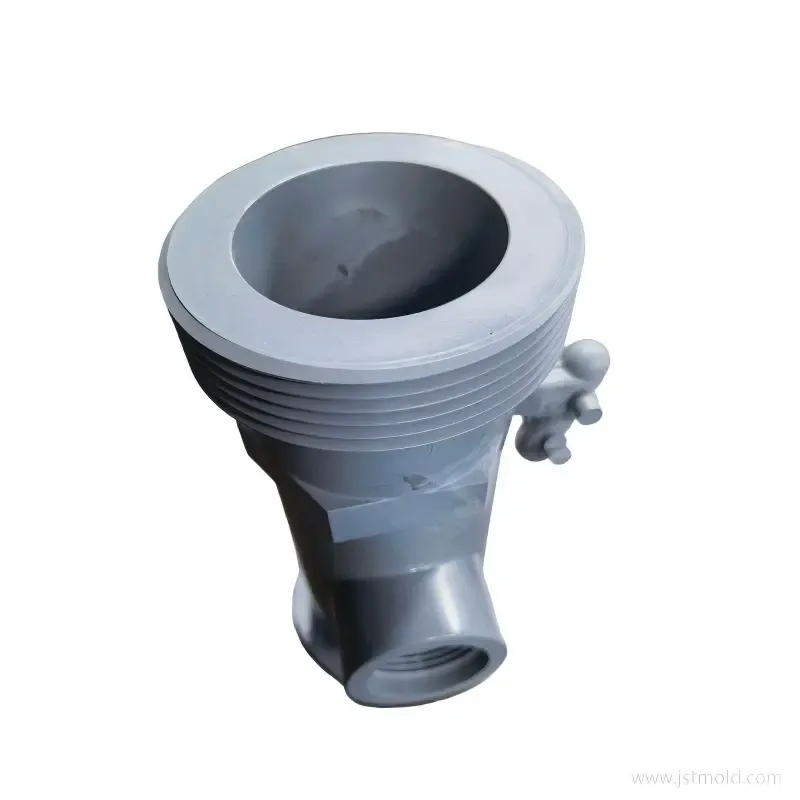
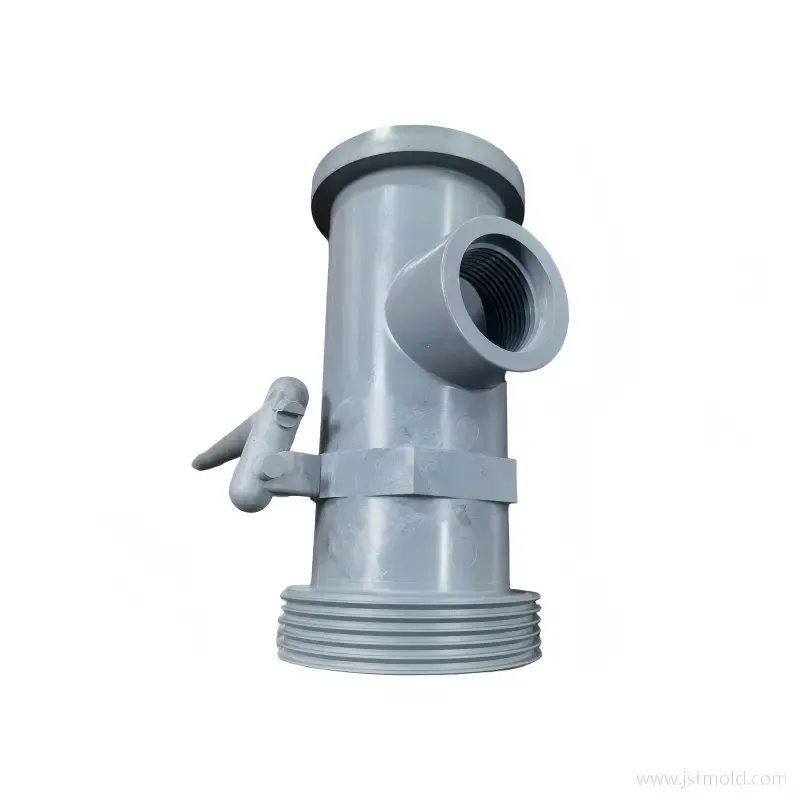
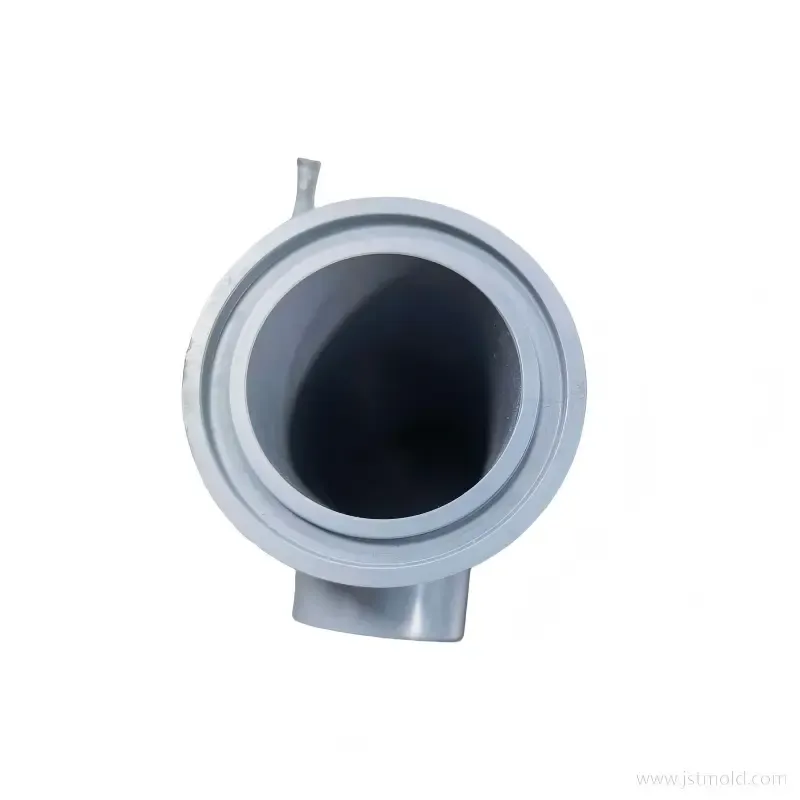
PVC injection-molded technical part shown as a trial sample with the runner attached. The page explains PVC-specific tooling considerations, including temperature control, residence time, gate and runner design, venting, mold condition and sample evaluation.
Specifications
- Material:
- PVC
- Process:
- Injection molding
- Sample Status:
- Trial sample with runner attached
- Tooling Focus:
- Venting, gate design, temperature control, corrosion resistance
- Main Risks:
- Material degradation, burn marks, gas generation, sticking
- Support:
- DFM review, mold engineering, tooling and molding coordination
- Application:
- PVC technical and functional plastic parts
This page presents a PVC injection-molded technical part photographed after a mold trial with the runner still attached. The sample provides a practical reference for discussing the relationship between the molded component and its feed system before trimming.
For product engineers, process engineers and sourcing teams, the important question is not simply whether PVC can be injection molded. It is whether the exact PVC formulation, part geometry, mold design and process controls can be coordinated to meet the component's functional and production requirements.
PVC generally requires careful control of thermal exposure and process conditions. Material grade, residence time, filling behavior, venting, gate and runner design, mold condition and maintenance all need to be considered. The appropriate settings and tooling details must be established for the selected PVC compound, machine and part—not copied from a generic material guide.
What This Trial Sample Shows
The visible sample is a PVC injection-molded technical part with the runner attached after molding. Keeping the runner in the photograph helps show the component before trimming and provides a useful starting point for discussing the feed arrangement.
The associated public engineering reference describes a cylindrical body with threaded geometry and a side feature. These features are relevant to DFM because threaded and lateral geometries can affect parting direction, core design, release, gate placement and inspection.
The sample image alone does not establish:
- the exact PVC grade or formulation;
- the mold's internal structure or release mechanism;
- dimensional conformity or repeatability;
- mechanical, chemical, pressure or service-life performance;
- whether the sample has passed customer approval or production validation.
Those points must be confirmed from the project drawing, material data, mold design, inspection records and agreed trial criteria.
Why PVC Injection Molding Needs Specific Process Planning
PVC is more sensitive to excessive thermal exposure than many commonly molded thermoplastics. The processing window depends on the formulation and stabilizer package as well as the machine, screw, barrel, mold and part geometry.
A process that creates excessive heat history or unnecessarily long residence time can increase the risk of degradation. Inadequate venting can contribute to trapped gas, burn marks or incomplete filling. Gate and runner choices affect flow and the material's path through the mold.
The engineering team should review the complete material-to-mold-to-process relationship rather than treating temperature as an isolated machine setting.
Material grade and formulation
"PVC" is not a complete material specification. The buyer should identify whether the project uses rigid or flexible PVC, the exact compound or grade, the supplier, relevant technical data and any customer-approved formulation.
Different formulations can behave differently. Confirm the material supplier's processing recommendations and any restrictions on thermal exposure, residence time, purge or handling. Do not select a process window from a generic online temperature range.
Thermal exposure and residence time
The objective is to fill the part without unnecessary thermal exposure. Review the expected shot size, barrel capacity, screw recovery, interruptions, purge procedure and production schedule with the material supplier's guidance.
If the machine is oversized for the shot or production interruptions are frequent, the material may experience a different residence history than expected. These are assessment points, not proof that a particular machine or trial has a problem.
Venting and gas evacuation
Air and process gases need a suitable escape path as the cavity fills. Venting should be considered near end-of-fill regions and other areas where gas may become trapped.
Poor venting can contribute to burn marks, short shots or unstable surface quality. Vent locations and dimensions must be designed around the actual geometry, material, filling pattern and mold construction. Do not prescribe a universal vent depth without the exact PVC compound and tooling design.
Gate and runner arrangement
Gate location and runner layout influence the flow path, filling balance, weld-line position, pressure loss and material residence in the feed system.
The visible runner on this trial sample is useful for identifying the feed system before trimming. It does not, by itself, prove that the gate or runner design is optimal. The buyer and mold supplier should review runner dimensions, gate type and location, filling sequence, trimming requirements and gate-mark restrictions.
Mold condition, corrosion and maintenance
PVC projects should consider the compatibility of mold materials and surface protection with the selected compound and production environment. Cleaning access, residue removal, vent maintenance and the ability to inspect relevant mold areas should be included in the tooling review.
The exact steel, coating or surface treatment should be selected from the material formulation, production conditions, maintenance plan and toolmaker's engineering assessment. This page does not assign an unverified steel grade to the pictured sample.
Threaded and Side Features: What Must Be Reviewed
The associated PVC engineering reference describes threaded geometry and a side feature. Such features can create additional tooling questions.
For a threaded feature, identify:
- whether the thread is internal or external;
- the complete thread profile or standard;
- its relationship to the mold-opening direction;
- whether the thread forms an undercut;
- the permitted parting line and release marks;
- the mating component and inspection method.
For a side feature, identify whether it can be formed in the primary opening direction or requires a side action, insert, lifter or another design approach.
An automatic unscrewing system may be one possible solution for a suitable threaded geometry, but it is not confirmed as the mechanism used for the PVC trial sample shown here. The actual release strategy must be selected from the approved CAD and tooling design.
For a separate application reference, see JST's threaded plastic fluid connector. It is a different component example and does not establish the resin or mold mechanism used for this PVC sample.
For a separate tooling example, see Threaded Industrial Parts | Automatic Unscrewing Tooling. That page describes an automatic-unscrewing mold concept for suitable threaded parts; it is not evidence that the PVC sample uses that mechanism.
How to Evaluate a PVC Mold Trial Sample
A useful trial review should compare the sample and process observations with the approved drawing and agreed acceptance criteria.
Part and dimensional review
Check the critical dimensions, datums, wall sections, thread features and side geometry identified on the drawing. Agree the measurement method and any required conditioning before comparing dimensions. PVC material behavior and the time between molding and measurement may matter to the agreed inspection plan.
Filling and appearance review
Record whether the part is fully filled and inspect for relevant defects such as burn marks, short shots, visible gas marks, flash, sink, distortion or surface irregularity. Do not infer the cause from appearance alone. Correlate observations with cavity location, filling sequence, gate and vent layout, process records and material information.
Runner and gate review
Inspect the runner and gate before trimming. Record the gate location, runner condition, trimming requirement and any visible issue. Confirm whether the gate vestige is acceptable for the part's appearance or function.
Release and ejection review
Observe whether the part and runner release consistently during the trial. Inspect for sticking, deformation, stress whitening or damage around threaded and side features. If a moving core or side action is used, evaluate its movement and maintenance needs against the actual mold design. Do not assume the mechanism from the part photograph.
Process record and repeatability
A single sample is not proof of stable mass production. For a meaningful process assessment, agree the number of trial cycles, material lot, machine and mold conditions, process records, sample identification, inspection method and acceptance limits. Any claim of repeatability or capability must be supported by the agreed data.
DFM Checklist for a PVC Technical Part
Review area | What the buyer and mold supplier should confirm |
|---|---|
PVC compound | Exact grade, supplier, rigid/flexible formulation and technical data |
Part geometry | Wall thickness, flow length, ribs, bosses, threads and side features |
Thermal history | Machine suitability, shot size, residence considerations and interruption plan |
Gate and runner | Gate location, runner layout, filling path, trimming and material handling |
Venting | End-of-fill locations, gas evacuation and maintenance access |
Mold materials | Compatibility with the selected compound and maintenance environment |
Release | Draft, ejection, thread release and any required side actions |
Inspection | Critical dimensions, appearance, functional checks and conditioning |
Trial criteria | Trial stages, sample quantity, records, acceptance limits and customer approval |
Production | Annual volume, cavity target, cycle expectations and production location |
The review should identify confirmed requirements and unresolved decisions separately. Do not finalize the tooling concept from a sample photograph alone.
How JST Mould Supports PVC Tooling and Molding Projects
JST's public PVC product information describes support through engineering review, DFM, mold-design evaluation, tooling coordination, trial assessment and qualified manufacturing resources with PVC processing experience.
For a new project, the required scope should be confirmed against the customer's drawing, exact PVC compound, production requirements and available manufacturing resources. The review may address:
- part and mold feasibility;
- gate and runner layout;
- venting strategy;
- thermal and residence-time considerations;
- mold material and maintenance planning;
- threaded or side-feature release;
- trial sample evaluation and inspection requirements.
The scope and deliverables should be agreed for each project. Do not interpret this general support description as a guarantee of a particular result, process window, material grade or production qualification.
What to Provide for a PVC Mold DFM Review or Quotation
To reduce assumptions during the first review, provide:
- 3D CAD in STEP or another agreed neutral format;
- 2D drawing with critical dimensions and datums, if available;
- exact PVC grade, supplier and technical data sheet;
- rigid or flexible PVC designation and any formulation constraints;
- nominal wall thickness and key geometry;
- gate, appearance and trimming requirements, if already defined;
- annual production volume and target cavity count;
- required mold life and production location;
- critical inspection and functional requirements;
- any known trial history, defects or process observations.
If a requirement is not yet fixed, mark it as provisional or open for engineering discussion. This is more useful than silently assuming a material or acceptance criterion.
Related Threaded Plastic Part and PVC Engineering References
- For a separate threaded component application, see the Threaded Fluid Connector | High-Pressure Sealing Precision. This is a different part reference; do not assume it uses PVC.
- For the detailed material and process discussion, read PVC Injection Molding: Mold Design, Venting and Processing Challenges.
- For a separate tooling example, see Threaded Industrial Parts | Automatic Unscrewing Tooling. The mechanism used for this PVC sample has not been established by the sample photograph.
Frequently Asked Questions
Why does PVC injection molding need careful temperature control?
PVC is sensitive to excessive thermal exposure. The acceptable process conditions depend on the exact compound, stabilizer package, machine, screw, shot size, residence history and part geometry. Follow the resin supplier's recommendations and validate the process on the actual equipment.
What can cause burn marks in PVC injection molding?
Burn marks can be associated with trapped gas, inadequate venting, filling conditions or excessive thermal exposure. The actual cause should be investigated using part location, vent design, filling observations, process records and material information rather than assumed from appearance alone.
Why should the runner remain attached in a trial reference?
A runner-attached sample shows the component before trimming and makes the feed system visible for discussion. It can help engineers review the gate/runner relationship, but it does not prove that the design is optimal or that the process is production-qualified.
Does the PVC sample use an automatic unscrewing mold?
That is not established by the sample photograph or available public sample description. The release mechanism must be confirmed from the actual mold design or project record. Automatic unscrewing is only one possible option for suitable threaded geometries.
Does every PVC part require a corrosion-resistant special steel mold?
The mold material and any surface protection should be selected according to the exact PVC formulation, production conditions, maintenance environment and toolmaker's engineering assessment. Do not select a steel grade from a generic rule alone.
What should be checked during a PVC mold trial?
Review dimensional conformity, filling, appearance, gate and runner condition, venting-related symptoms, part release, process records and any functional requirements defined by the customer. The sample quantity, conditioning, measurement method and acceptance limits should be agreed before the trial.
Can one trial sample prove that a PVC part is ready for mass production?
No. A single sample is a reference, not proof of repeatability or production capability. Production readiness requires agreed trial criteria, sufficient samples and process records, dimensional and functional checks, and customer approval where required.
What information is needed for a PVC injection mold quotation?
Provide the 3D model, drawing, exact PVC grade, wall thickness, critical dimensions, gate and appearance requirements, annual volume, target cavity count, mold-life expectation, production location and any known trial or quality requirements.
Request a PVC Mold DFM Review
If you are developing a custom PVC technical part, send JST Mould your 2D/3D drawings, exact PVC grade, critical dimensions, expected annual volume and any known molding or quality requirements. Include details of threaded or side features, gate restrictions and acceptance criteria where available.