
Aug 4, 2026Tier-1 Success Stories
EV Lightweighting Logic: Tooling for CFRP, SMC, and High-GF Composites (2026 Edition)
2026 EV weight reduction strategy. JST’s tooling logic for CFRP, SMC, and high-GF resins to achieve 30-60% weight reduction for Tier-1 OEMs.
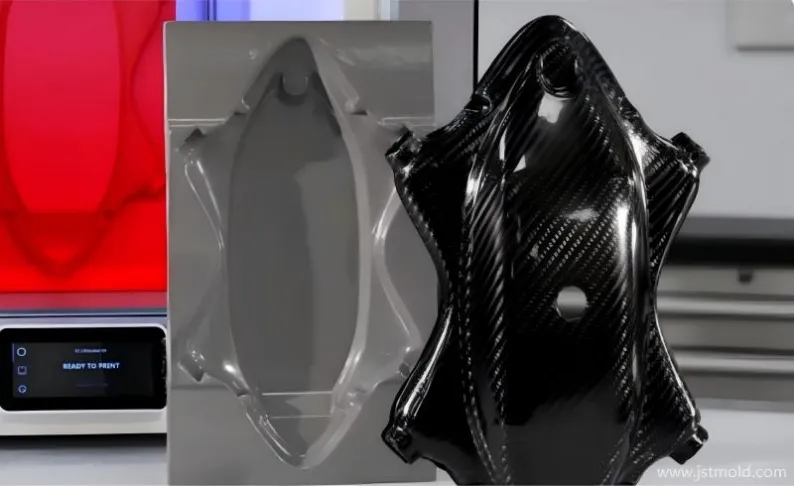
In the modern automotive industry, the drive toward energy efficiency, safety, and lightweighting is more intense than ever. Battery weight is the primary bottleneck for EV range. At JST Mold, we specialize in high-performance injection molding solutions that leverage advanced composite materials to meet the rigorous demands of global OEMs. We help clients replace heavy metal components with composite logic, achieving 30-60% weight reduction while maintaining superior crash-test integrity.
Every gram counts: We use CFRP logic to replace metal components.
I. The Strategic Evolution of Automotive Composites
The integration of composites into vehicles follows JST’s strategic three-step progression:
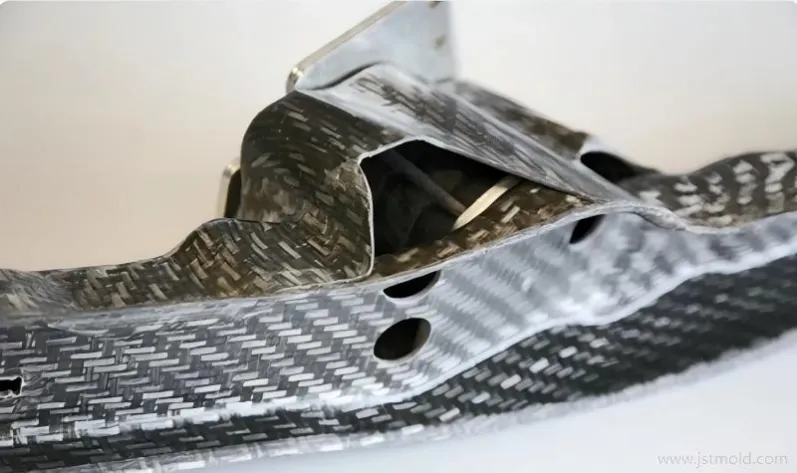
Fiber Logic: Controlling orientation to ensure mechanical strength.
Phase 1:
Modified Commodity Plastics: Utilizing PP, PVC, ABS, and PA enhanced for heat resistance. These are the current standards for interior and exterior trim components.
Phase 2:
- Glass Fiber Reinforced Polymers (GFRP): Thermoset Solutions: SMC (Sheet Molding Compound) and BMC (Bulk Molding Compound).
- Thermoplastic Solutions: GMT (Glass Mat Thermoplastics) and LFT (Long Fiber Thermoplastics). These materials are essential for functional and structural parts.
Phase 3:
Carbon Fiber Reinforced Polymers (CFRP): The "Holy Grail" of lightweighting. CFRP is increasingly used in load-bearing chassis and body structures to significantly reduce weight while increasing rigidity.
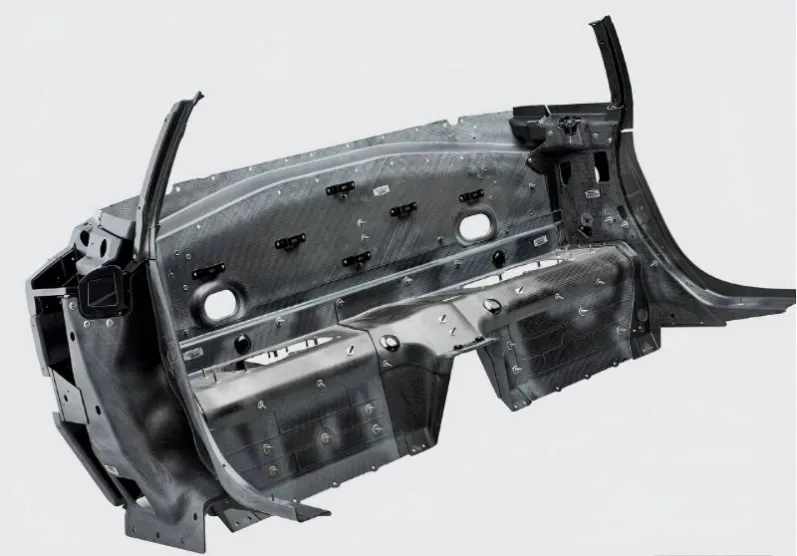
Beyond metal: A CFRP structural frame achieving 50% weight reduction.
II. Deep Dive: Thermoset Composites in Automotive Engineering
Thermoset composites play a vital role in high-stress environments. At JST Mold, we observe a growing trend in their application due to exceptional dimensional stability:
- Exterior Body Panels: SMC is widely used for hoods, trunks, and roof modules due to its "Class A" surface finish and resistance to thermal expansion.
- Structural Components: From front-end modules and bumper beams to battery enclosures for EVs, providing high-impact energy absorption.
- Under-the-Hood Parts: BMC is preferred for engine covers and oil pans because it maintains mechanical strength at temperatures up to 200°C.
- Precision Electricals: Ideal for insulation in EV charging ports and motor components.
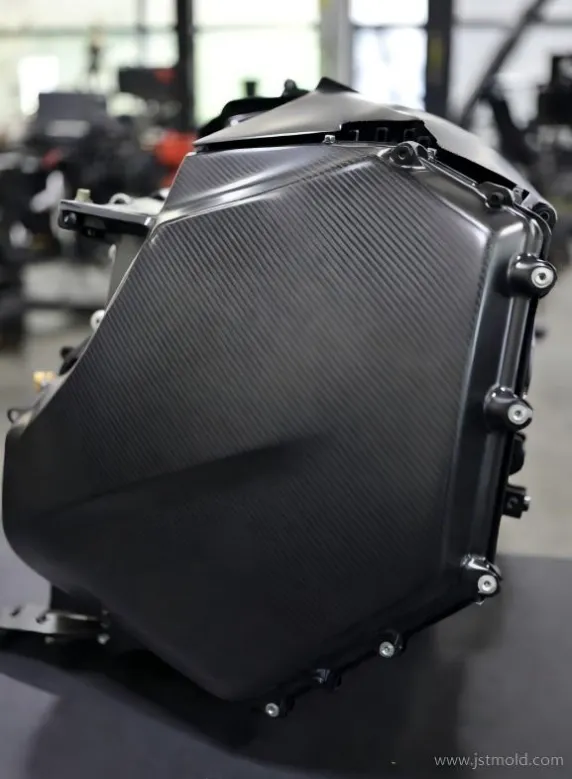
Thermal Stability: Thermoset parts withstanding 200C heat.
III. Global Market Trends & Data
The disparity in plastic usage highlights a major growth opportunity for international buyers:
- Developed Markets: Average plastic/composite usage reaches 120kg – 150kg per vehicle (approx. 12%-20% of total weight). High-end models like the Audi A2 have reached 24.6% composite integration.
- Industry Outlook: With the Asia-Pacific composite market exceeding €18 billion, the demand for precision-molded composite parts is set to skyrocket as manufacturers seek lighter frames to offset battery weight.
Real-World Case Studies: Automotive Lightweighting in Action
- BMW i Series (i3 / i8): Pioneering CFRP passenger cells (Life Module) achieving ~50% lighter weight vs. traditional steel. JST specializes in the interior brackets and supports used in this architecture.
- Tesla Model S / Model X: Featuring an all-aluminum body with selective carbon fiber reinforcements for battery enclosures and support structures.
- Qiantu K50: China's first mass-produced carbon fiber EV sports car, using 29 composite panels totaling just 46.7 kg.
- High-End Models (Polestar, Lamborghini): Utilizing "Dragonfly" structures and monocoques to boost torsional rigidity while shedding mass.
- Injection Molded CFRTP: The emerging trend. Carbon fiber filled thermoplastics (PA66/CF) achieve 30%-50% savings vs. metal with much faster cycle times.
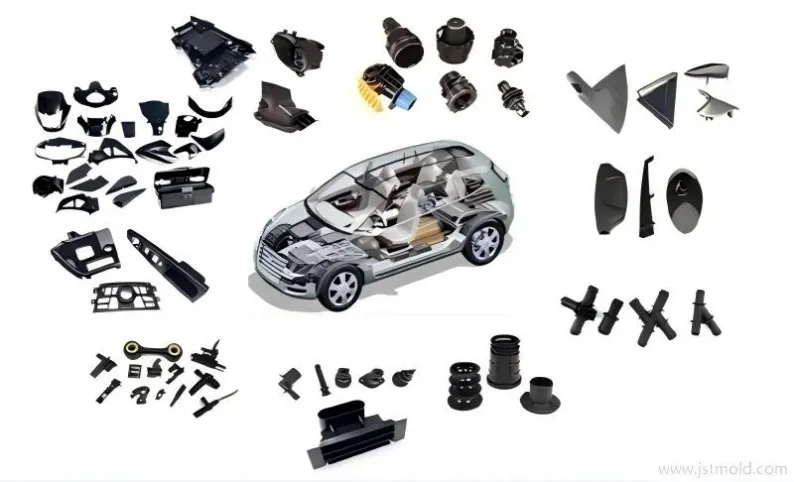
The 2026 EV Platform: A holistic approach to plastic-to-metal conversion
Conclusion: Your Strategic Partner for Lightweighting
By 2030, carbon fiber content in vehicles is projected to reach 5% of total weight. JST Mold specializes in innovative tooling for these advanced composites. We understand that processing reinforced materials is a war against physics and abrasive wear.
Why Choose JST Mold?
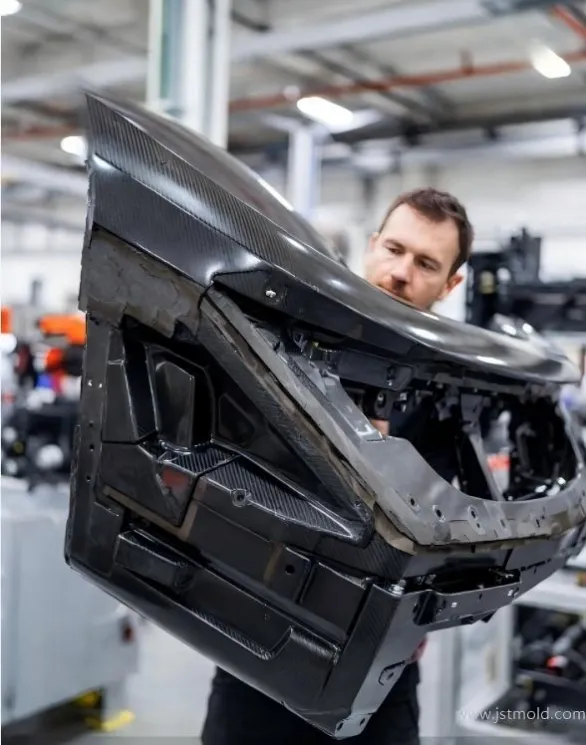
Shop Floor Reality: Validating large-format parts for Tier-1 assembly.
With decades of experience in export-grade mold design, JST Mold understands the complexities of reinforced polymers:
- Optimized cooling systems for 20% faster cycle times.
- Advanced venting designs to prevent fiber orientation defects.
- H13/2344 high-durability steel selection to withstand abrasive fibers.
JST 2026 Expert Insight:
Are you fighting a losing battle against vehicle mass and cycle-time bottlenecks?
Stop relying on generic DFM. High-glass-fill resins like PPS or CFRP demand a tooling partner who understands re-cast layer removal and turbulent flow cooling. At JST Mould, we provide the technical evidence you need to de-risk your next Tier-1 launch.
Let's optimize your 2026 program:
- Request a 48-hour DFM audit for fiber-reinforced components.
- Get a feasibility review for metal-to-plastic conversion.
- Audit our HRC 52-54 steel traceability protocols.