
Aug 2, 2026Precision Engineering & Tooling
2026 Mold Manufacturing Roadmap: 10 Critical Stages of Tier-1 Precision Engineering
2026 Tooling roadmap: From predictive DFM and Sodick WEDM to scientific T1 validation. Managing the 10 stages of high-precision Tier-1 mold manufacturing.
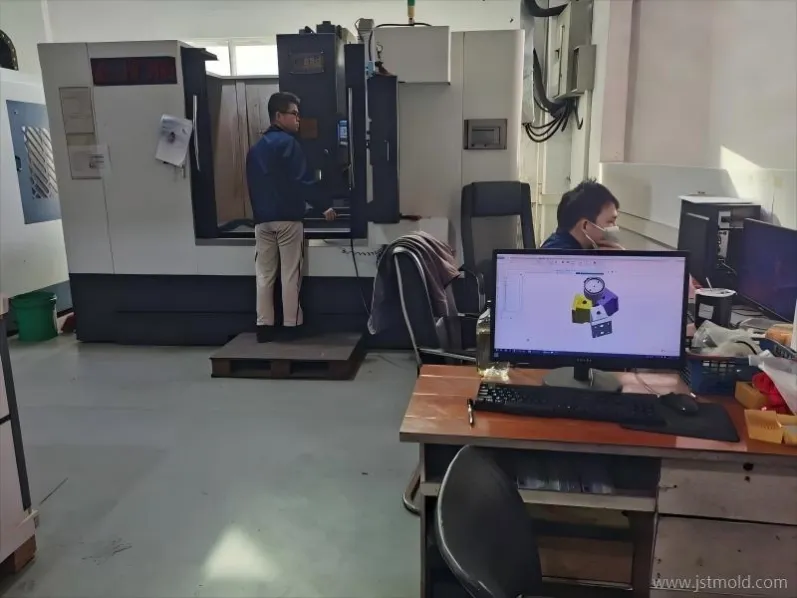
Tooling consistency is the pulse of any Tier-1 assembly line. At JST, we manage this through a deterministic 10-stage process from high-precision automotive components to intricate consumer electronics, the quality of the final product is inextricably linked to the excellence of the mold.
At JST Mold, we believe that superior mold making is a blend of rigorous engineering and artisanal craftsmanship. Below is an in-depth exploration of the 10 standard stages we employ to ensure every tool meets world-class standards.
Digital Continuity: Synchronizing 3D engineering blueprints with high-precision CNC execution.
Phase I: Strategic Engineering & Virtual Validation
The "Brain" of the mold determines the success of the project before a single piece of steel is cut.
1. Comprehensive Requirement Analysis (Receiving Drawings) Precision begins with understanding. Beyond just reviewing 3D models, our engineers scrutinize tolerances, material specifications, and functional requirements. A discrepancy of even 0.01mm at this stage can lead to systemic failure later.
2. DFM (Design for Manufacturing) Report We perform a critical "health check" on the design. By analyzing wall thickness, draft angles, and gate locations, we identify potential manufacturing risks early, saving our clients significant time and costs in the long run.
3. Advanced Mold Flow Analysis Using state-of-the-art simulation software, we predict how molten plastic will behave within the cavity. This allows us to anticipate and eliminate defects like air traps, sink marks, or weld lines in the virtual environment.
JST Advantage: We don't just look at filling; we perform Core Shift Analysis (FSI) to predict deflection before a single block of steel is cut.
4. Full-Scale Mold Design Our designers construct the blueprint for the five core systems: Cavity/Core, Gating, Ejection, Cooling, and Venting. A well-designed mold isn't just about shaping a part; it’s about optimizing cycle times and ensuring tool longevity.
Stage | Process Name | Key Technical Focus | JST Mold Value Addition |
Phase I | Engineering | DFM & Mold Flow | Eliminating risks before steel cutting; optimizing cycle time. |
Phase II | Machining | CNC, Sodick WEDM, Sinker EDM, Grinding | Micron-level precision (0.01mm) for complex geometries. |
Phase III | Validation | Ensuring aesthetic perfection and functional reliability. |
Note:The 10-Stage Framework: JST’s standardized logic for managing complex Tier-1 tooling projects.
Phase II: Precision Machining & Craftsmanship
The "Skeleton and Muscle" of the mold are forged through high-tech subtractive manufacturing.
5. CNC High-Precision Machining The heavy lifting is done here. Our CNC centers carve out the primary geometry of the mold with extreme accuracy, transforming raw steel into complex, high-precision forms.
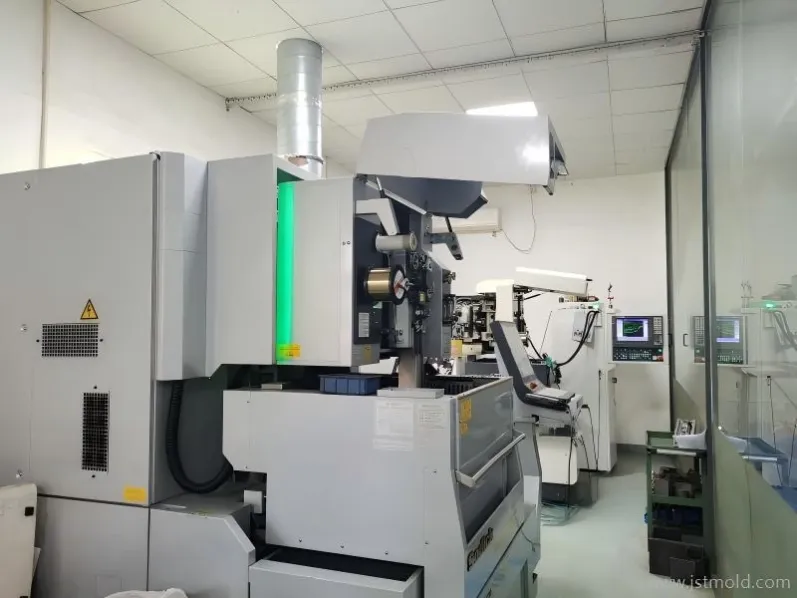
Technological Backbone: Delivering repeatable accuracy via premium Sodick WEDM systems.
6. Wire EDM (Electrical Discharge Machining) For features that require verticality or extremely tight tolerances—such as insert holes or ejector pin holes—Wire EDM provides the necessary stability and repeatable precision.
7. Sinker EDM (Electrical Discharge Machining) Where traditional cutting tools cannot reach—such as sharp internal corners or deep ribs—Sinker EDM uses electrical sparks to "erode" the steel into the desired shape with microscopic detail.
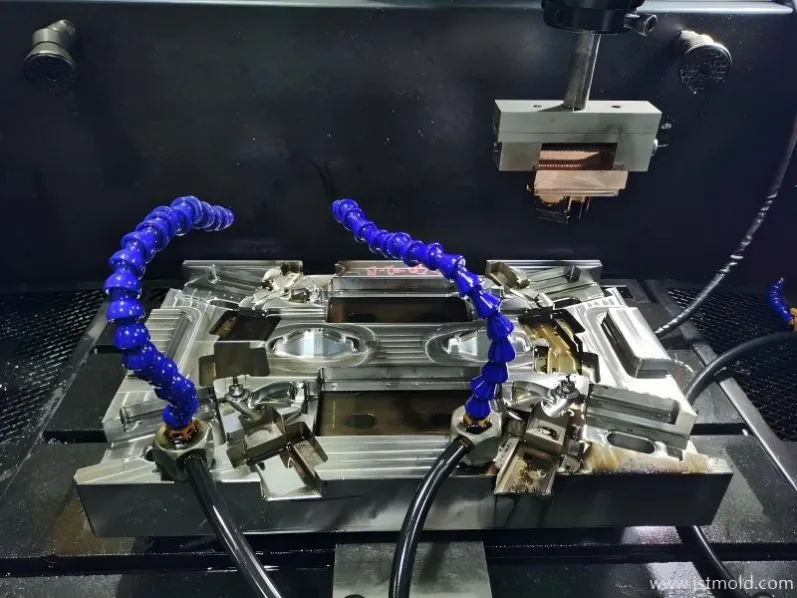
Microscopic Detail: Achieving flawless surface fidelity in complex mold architectures.
8. Precision Grinding The "Final Finishers." Grinding ensures that the parting lines and mating surfaces are perfectly flat and square, guaranteeing a seamless fit between mold components to prevent flash.
Phase III: Final Refinement & Validation
The "Final Exam" before mass production.
9. Polishing & Texturing Aesthetics meet functionality. Whether it’s a mirror-finish for optical clarity or a specific texture (e.g., VDI or MT) for grip and scratch resistance, our technicians hand-finish the mold surfaces to perfection.
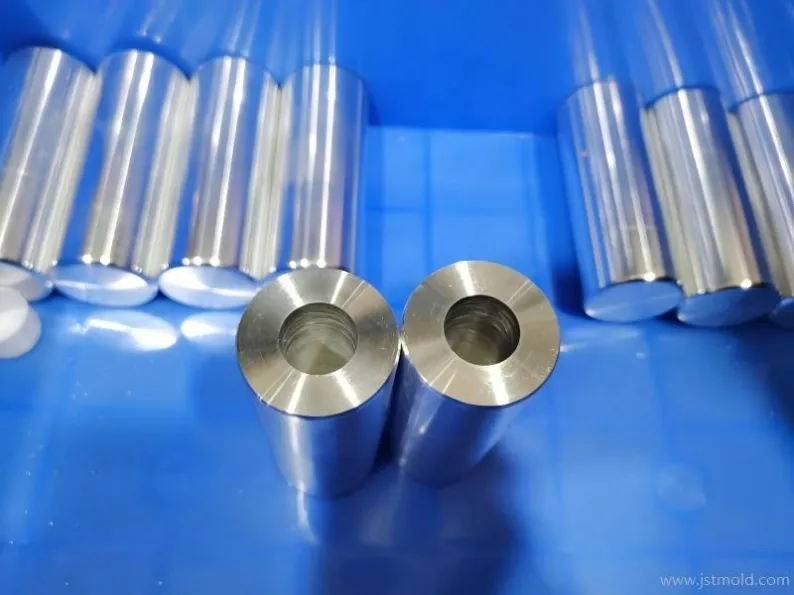
Interchangeable Accuracy: Mirror-finished components ready for master assembly and T1 trial.
10. Mold Trial (T1) & Validation The moment of truth. We mount the mold onto our injection machines to produce the first physical samples. We rigorously check dimensions, aesthetics, and mechanical function to ensure the "T1" samples meet all client benchmarks, aligning with VDA manufacturing benchmarks.
Conclusion: The JST Mold Commitment
A high-quality mold is the result of hundreds of hours of labor, micron-level precision, and repeated validation. At JST Mold, we don’t just build tools; we engineer the foundations for your product’s success.
Ready to Bring Your Next Project to Life?At JST Mold, we don't just manufacture molds; we partner with you to ensure manufacturing feasibility, cost-efficiency, and market success. Whether you are in the early stages of a prototype or ready for high-volume production, our engineering team is here to provide professional insights.JST 2026 Expert Insight: To safeguard your intellectual property and project data, we recommend sending your 3D files via corporate email to info@jstmould.com for a secure, expert-led DFM audit. Let's build a tool that hits the ground running.