Sep 21, 2026Engineering Whitepapers
Injection Mold RFQ Guide: What to Send for an Accurate Mold Quote
Learn what to include in an injection mold RFQ, from 3D CAD and material requirements to volume, tolerances and mold specifications, so suppliers can prepare a more accurate and comparable quotation.
Injection Mold RFQ Preparation Guide: What Information Should You Send to a Mold Supplier?
You have a plastic part ready for sourcing and send the same CAD file to several mold suppliers.
A few days later, the quotations come back with very different tooling prices, cavity recommendations, mold steels, lead times and even different assumptions about the mold structure.
This does not always mean one supplier is expensive and another is cheap.
Very often, the suppliers are simply quoting different assumptions.
A well-prepared injection mold RFQ helps suppliers understand the same technical target, identify tooling risks earlier and prepare quotations that are easier to compare.
You do not need to know every mold-making detail before requesting a quotation. But the more clearly you define the product, expected production volume and project requirements, the more meaningful the quotation becomes.
What Information Is Needed for an Injection Mold RFQ?
A useful injection mold RFQ does not need to be complicated.
For most projects, the following information gives the mold supplier a solid starting point:
RFQ Information | What to Provide | Why It Matters |
|---|---|---|
3D CAD | STEP, X_T, IGES or another usable 3D format | Allows evaluation of geometry, wall thickness, undercuts and preliminary mold structure |
2D Drawing | If available: dimensions, tolerances, CTQs and surface requirements | Identifies which dimensions and functional areas are critical |
Plastic Material | Exact grade or at least the resin family | Influences shrinkage, wear, venting and molding conditions |
Annual Volume | Estimated yearly requirement | Helps determine cavity count, mold durability and production strategy |
Expected Mold Life | Approximate target shot quantity | Influences steel selection and tooling construction |
Surface Requirement | Texture, polish, gloss or cosmetic zones | Affects machining and finishing requirements |
Critical Tolerances | Assembly or functional dimensions | Helps evaluate tooling accuracy and inspection requirements |
Product Application | Functional use and service conditions | Helps the engineering team understand performance risks |
Mold Destination | Mold stays in China or is exported to another factory | Determines mold standard, machine interface and delivery requirements |
Project Timing | Target T1 or production date | Helps establish a realistic tooling schedule |
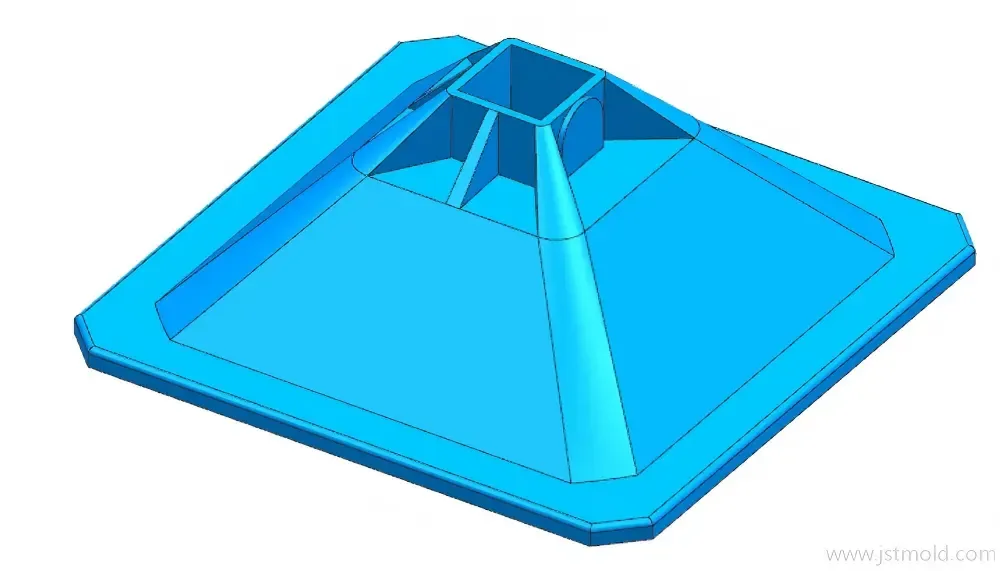
An accurate 3D CAD model helps the mold supplier evaluate part geometry, wall transitions and preliminary tooling requirements before preparing a quotation.
Do You Need Both 3D CAD and a 2D Drawing?
For most injection mold projects, a 3D CAD model is the most important starting file.
It allows the mold maker to review:
- overall geometry
- wall thickness
- ribs and bosses
- holes and openings
- undercuts
- potential sliders or lifters
- approximate parting-line locations
- possible gate areas
- molded part volume
However, a 3D model does not always communicate every manufacturing requirement.
A controlled 2D drawing can provide information that may not be obvious from the CAD model, such as:
- critical tolerances
- datum definitions
- CTQ dimensions
- surface-finish requirements
- assembly dimensions
- special inspection requirements
The 3D model tells the mold maker what the part looks like. The drawing tells the mold maker which details matter most.
If you do not have a complete 2D drawing yet, that does not necessarily prevent an initial mold quotation.
Send the available 3D data and clearly identify any known critical dimensions or functional requirements. The missing items can then be clarified before final tooling design.
What If You Do Not Have Complete Drawings Yet?
Not every injection mold project begins with production-ready CAD.
Some buyers approach a mold supplier with:
- a physical sample
- product photos
- an existing molded part
- approximate dimensions
- a concept model
- an assembly requirement
- incomplete CAD data
In these situations, the first step should usually be a preliminary tooling assessment, rather than pretending that every detail is already fixed.
For example, if only a product sample and approximate dimensions are available, a mold maker may still be able to discuss:
- likely mold complexity
- possible parting direction
- major undercuts
- preliminary cavity concept
- likely tooling risks
- information still required before a firm quotation
However, an accurate final mold price normally requires more complete product definition.
A preliminary budget estimate and a production-ready tooling quotation are not the same thing.
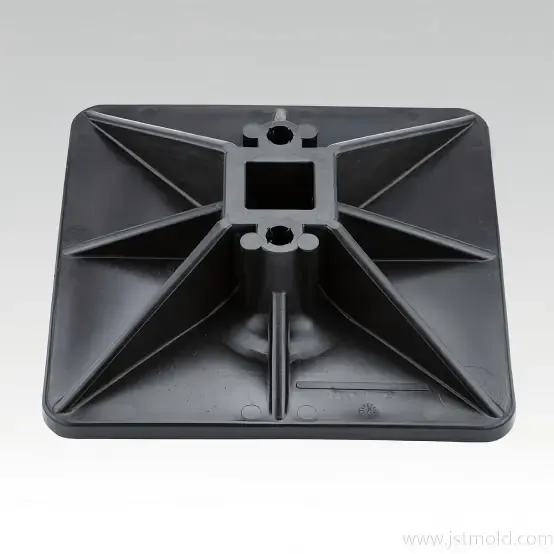
Actual part geometry—including ribs, wall-thickness transitions and central features—can materially affect mold construction and quotation assumptions.
Can You Request a Mold Quote from Photos Only?
Photos can help a supplier understand the product concept, but they usually cannot define:
- exact dimensions
- wall thickness
- draft angles
- internal structures
- tolerance requirements
- assembly relationships
- material specification
Therefore, a photo-based enquiry is better treated as an early-stage evaluation.
If the project continues, the supplier will normally need additional dimensional or CAD information before the mold structure and price can be finalized.
Why Plastic Material Should Be Included in the RFQ
The plastic material is not only a raw-material purchasing detail. It can affect the mold itself.
For example, material selection can influence:
- shrinkage
- dimensional stability
- flow behavior
- venting requirements
- gate design
- wear resistance
- corrosion risk
- surface quality
- processing temperature
A non-filled PP part and a glass-fiber-reinforced engineering plastic may require very different tooling considerations.
If the exact material grade has not yet been selected, provide as much information as possible. For example:
PA66 + 30% GF, exact grade to be confirmed.
or:
Material not finalized. Supplier may recommend suitable alternatives based on the application.
It is better to mark an item as open than to provide an incorrect assumption.
Why Annual Volume Changes the Mold Quotation
Annual production volume is one of the most important pieces of information in a mold RFQ.
Consider two projects using a similar plastic component:
Project A: 10,000 parts per year
Project B: 500,000 parts per year
The product geometry may look similar, but the optimal tooling solution may not be the same.
Production volume can affect decisions such as:
- single cavity or multi-cavity
- cold runner or hot runner
- mold steel selection
- insert steel selection
- wear resistance
- automation requirements
- cycle-time targets
- expected mold life
- maintenance planning
A higher production volume does not automatically mean that every component of the mold must use the most expensive steel.
The appropriate construction should be based on the expected mold life, plastic material, wear areas, part requirements and production conditions. Read our guide to mold steel selection based on expected mold life for a more detailed comparison of commonly used tooling steels.
Should You Specify Mold Steel in the RFQ?
If your company already has a tooling standard, the required mold steel should be included.
However, buyers do not always need to select mold steel themselves.
If the steel specification is open, it is often more useful to provide:
- expected mold life
- plastic material
- annual production volume
- surface requirement
- corrosion conditions
- wear conditions
The mold maker can then recommend suitable steels for different mold components.
For example, the cavity and core may require a different material from sliders, inserts or wear components.
This is why a quotation that simply says “steel: P20” without explaining the intended mold life or application may not tell the whole story.
Mold Only or Mold + Production?
This should be clearly stated in the RFQ.
There are several common project models:
Mold Built for Production at the Supplier
The mold remains at the mold maker or injection molding supplier and is used for ongoing part production.
Export Mold
The mold is built in China and shipped to the buyer or another injection molding factory.
Mold + Initial Production
The supplier builds the mold, runs initial production and may later transfer the mold.
These models require different quotation considerations.
For an export mold, the supplier may need information about the destination injection molding machine, including:
- platen dimensions
- tie-bar spacing
- locating ring
- nozzle radius
- ejector interface
- hydraulic requirements
- electrical requirements
- water connections
- hot-runner controller compatibility
Without this information, the mold may be mechanically correct but incompatible with the destination machine.
A mold that produces a good part is not automatically an export-ready mold.
Why Can Two Mold Suppliers Quote Very Different Prices?
A lower mold quotation does not necessarily describe the same tooling solution.
For example:
Supplier A
- 1 cavity
- standard pre-hardened steel
- cold runner
- lower mold-life assumption
Supplier B
- 2 cavities
- hardened cavity inserts
- hot runner
- higher mold-life assumption
- additional wear components
The second mold will naturally cost more.
But the important question is not simply:
Which supplier is cheaper?
The more useful question is:
Are both suppliers quoting the same technical requirement?
Before comparing tooling prices, compare the assumptions behind the quotations.
Check:
- cavity number
- mold steel
- mold base
- runner system
- hot-runner brand
- expected mold life
- tooling standard
- mold accessories
- lead time
- trial scope
- validation requirements
Otherwise, two quotations that appear to compete on price may actually describe different molds.
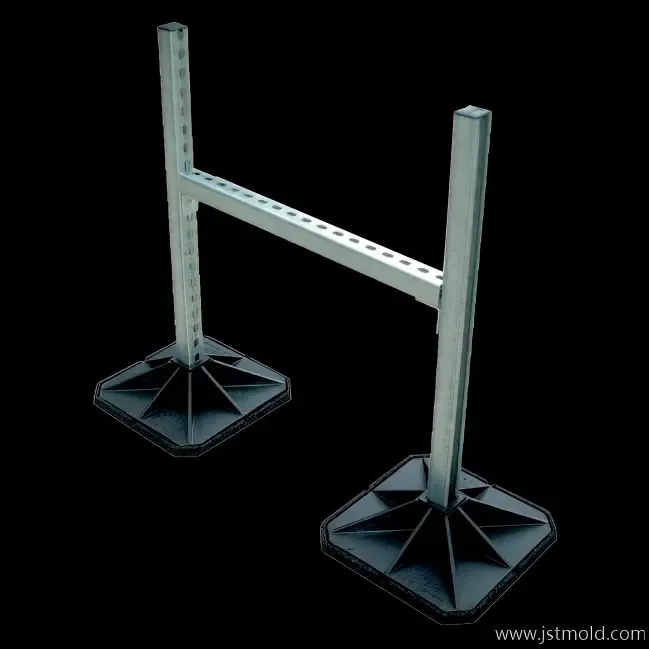
Product application and assembly conditions help the mold supplier understand load, fit, material and functional requirements that may not be obvious from CAD alone.
What Should Be Clearly Listed in an Injection Mold Quotation?
A useful mold quotation should make the major assumptions visible.
Depending on the project, these may include:
- mold cavity
- cavity and core steel
- mold base
- runner system
- hot-runner brand
- gate concept
- expected mold life
- mold dimensions
- approximate mold weight
- tooling lead time
- estimated T1 timing
- cycle-time assumption
- trial quantity
- part price, if production is included
- packing
- payment terms
This allows the buyer to compare suppliers on a more consistent basis.
If an important requirement remains open, it should be identified rather than silently assumed.
For tight-tolerance components, the quotation assumptions should also reflect the features that control functional performance. Our precision plastic gear molding case study shows how material behavior, tooth geometry and dimensional stability can affect the tooling and validation strategy.
What Happens After JST Mould Receives an RFQ?
Our RFQ review normally begins with the available product information and project requirements.
- Review the Product Data
We first review the available:
- 3D CAD
- drawings
- material information
- production volume
- mold-life requirement
- application
- project schedule
The goal is to understand what has already been defined and what remains open.
2. Identify Missing or Unclear Requirements
Instead of silently assuming every missing specification, we identify the points that can materially affect the quotation.
For example:
- material not finalized
- unclear tolerance requirement
- unknown production volume
- export-machine information missing
- cosmetic requirement not defined
Resolving these points early can prevent quotation changes later.
3. Review the Preliminary Mold Structure
Depending on the available product data, the engineering team may review:
- parting direction
- undercuts
- sliders
- lifters
- ejection
- preliminary gating concept
- difficult molding areas
At the RFQ stage, this is a preliminary engineering review rather than a final mold design.
Parts with opposing undercuts or restricted demolding space may require a more specialized structure. See our explanation of half-slider mold design for complex undercuts for one example of how part geometry affects tooling logic.
4. Identify Major Molding Risks
Certain product features may require additional attention before tooling begins.
Typical examples include:
- thick-wall areas
- sink marks
- internal voids
- weld lines
- deformation
- difficult filling
- trapped air
- critical dimensional areas
For more demanding projects, these issues may later be investigated through DFM, Moldflow analysis, mold trials and dimensional verification.
When a part contains thick sections, ribs or bosses, our guide to sink marks and internal voids in injection molding explains how geometry, gating, packing and cooling interact.
5. Define the Quotation Assumptions
The final quotation should state the important assumptions clearly enough for both sides to understand what is included.
This reduces the risk of discovering later that the buyer and mold supplier were discussing different tooling specifications.
A Practical Injection Mold RFQ Checklist
Before sending your RFQ, check whether you can provide the following:
☐ 3D CAD
☐ 2D drawing, if available
☐ Plastic material
☐ Annual production volume
☐ Expected mold life
☐ Critical tolerances
☐ Surface requirement
☐ Product application
☐ Mold destination
☐ Injection molding machine information for export molds
☐ Target project timing
☐ Any company-specific mold standards
You do not need to wait until every box is complete.
If an item has not yet been finalized, simply mark it:
Open / To be confirmed / Supplier recommendation required
That is usually more useful than providing an incorrect specification.
Frequently Asked Questions
Can I Request an Injection Mold Quote Without a 3D CAD File?
Yes. An initial discussion or preliminary assessment may sometimes be possible using product photos, samples or dimensional information.
However, an accurate production-tool quotation normally requires sufficiently detailed product geometry.
Is a 2D Drawing Necessary If I Already Have a 3D Model?
Not always for the first quotation.
However, a 2D drawing is valuable when the project includes critical tolerances, inspection requirements, specific datums or surface requirements that are not fully communicated by the 3D model.
What If the Plastic Material Has Not Been Finalized?
Provide the known material family, application requirements or candidate materials and mark the final grade as open.
The quotation assumptions can then be clarified before tooling begins.
Why Does Annual Production Volume Affect Mold Cost?
Production volume can influence cavity number, mold steel, runner design, mold life, wear requirements, cycle-time expectations and automation strategy.
The same plastic part may therefore require a different mold design for low-volume and high-volume production.
Why Are Quotations From Different Mold Makers So Different?
Different suppliers may assume different cavity numbers, steels, hot-runner systems, mold-life targets, tooling standards or validation requirements.
Compare the technical assumptions behind the quotation before comparing the final price.
What Information Is Needed If the Mold Will Be Exported to Our Factory?
In addition to normal product information, the mold supplier may need the destination injection molding machine specifications, interface requirements, electrical standard, hydraulic requirements, water connections and tooling standard.
Preparing an Injection Mold RFQ?
You do not need to prepare a perfect tooling specification before contacting a mold supplier.
Send the information you already have, such as:
- 3D CAD
- available drawings
- material requirement
- estimated annual volume
- target mold life
- application
- project timing
If some requirements are still open, identify them clearly.
JST Mould can review the available project information and identify the technical points that should be clarified before a firm tooling quotation is prepared.