Precision Engineering & Tooling
Customer-Site Injection Mold Trial: What Buyers Should Verify Before Tool Acceptance
Prepare for a customer-site injection mold trial. Learn how buyers verify machine readiness, trial evidence, part requirements, open issues and tool acceptance.
A mold that produces samples at a toolmaker's facility has not automatically demonstrated that it is ready for the buyer's production environment. The intended production machine, site utilities, operating procedures, part requirements and customer approval process all affect the next decision.
For a tooling buyer, a customer-site injection mold trial is therefore more than a sample-making exercise. It is a structured opportunity to review the mold in the environment where it is expected to operate, examine the evidence produced during the trial and agree what must happen before the tool can be accepted or released.
The most important question is not simply, “Did the mold run?” It is: “What has this trial demonstrated, what remains unverified, and who has authority to approve the next stage?”
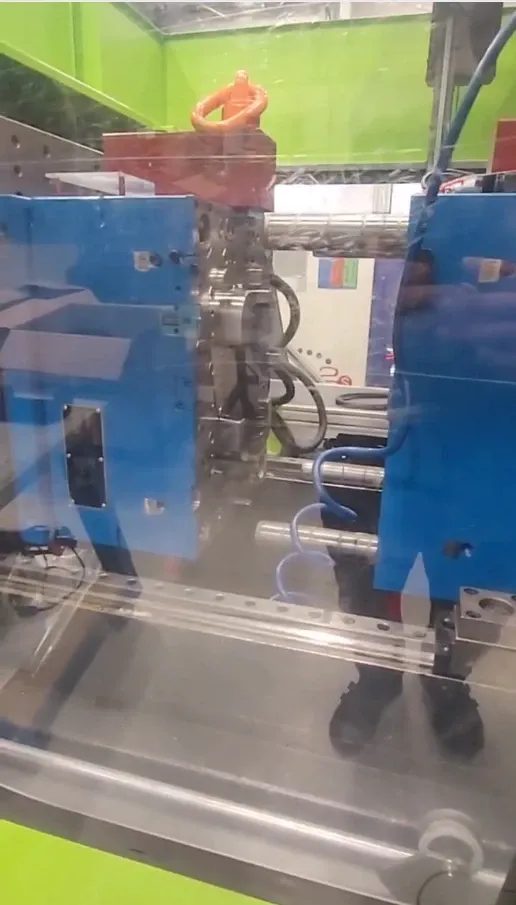
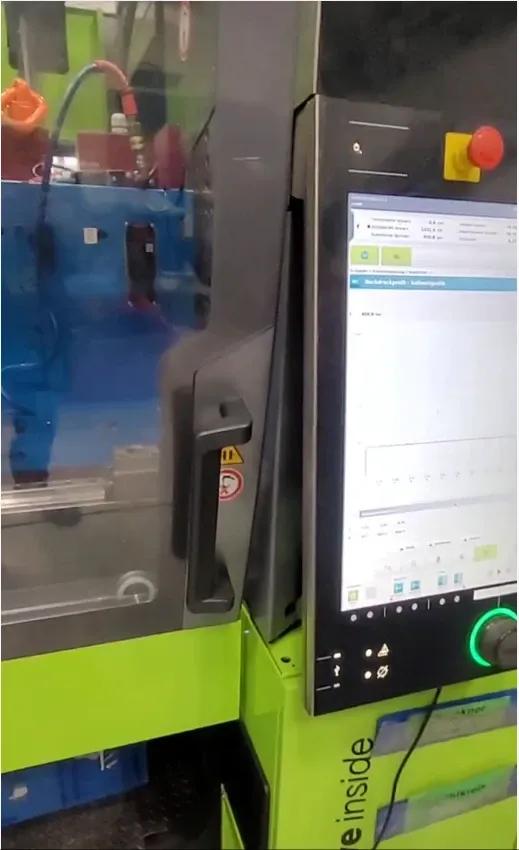
JST Mould's engineering showcase includes a real customer-site injection mold trial on an ENGEL machine. The cover and in-article photographs illustrate two visible aspects of that project context: the machine control area and the mold installed in the clamping area. No customer identity, location, mold specification or trial outcome is disclosed. The guidance below is a buyer-oriented decision framework; the actual acceptance requirements must always follow the approved drawing, purchase agreement and customer quality plan.
This article complements the technical focus of Part 1, which explains how to establish a measurable T1 process baseline, and Part 2, which covers mold-level validation and acceptance checkpoints. Here, the focus is the buyer's decision at the customer site.
1. Agree on the acceptance decision before arranging the trial
A trial can consume engineering time, machine capacity and production resources. If the buyer and supplier have different expectations, even a technically useful trial can end with uncertainty about whether the mold is ready for handover.
Before the trial, define what the activity is intended to prove. Separate the requirements into four groups:
- Mold and machine operation: whether the mold can be installed and operated with the agreed machine interfaces and project-specific functions.
- Part requirements: which drawing dimensions, appearance characteristics, assembly interfaces and functional features must be evaluated.
- Trial evidence: which process records, samples, inspection reports, photographs or other documents must be produced.
- Decision authority: who can approve samples, accept deviations, close actions and authorize final acceptance or production release.
The buyer should identify the current drawing revision and the applicable specifications. If visual limit samples, functional fixtures, inspection methods or customer-specific forms are required, agree on them before the trial rather than after the samples have been produced.
Avoid vague acceptance language such as “good parts” or “stable running.” Translate it into requirements that can be checked and recorded. A sample can look acceptable while a critical dimension remains unverified; a dimensional report can be satisfactory while an assembly interface has not been tested.
Buyer checkpoint: Can the customer, moldmaker and molding team all explain what evidence is required and who will make each approval decision?
2. Confirm that the customer-site setup represents the intended production environment
One reason to arrange a trial at the customer's site is to review the mold in the context of the intended production equipment and operating environment. A mold may fit one press but require additional review before it is transferred to another machine.
Before installation, compare the trial machine with the machine identified for production. Depending on the mold and project, relevant interfaces may include:
- machine make, model and available clamping capacity;
- platen dimensions, tie-bar spacing and mold mounting arrangement;
- locating ring and nozzle interface;
- ejector pattern, stroke and available force;
- hydraulic, pneumatic, electrical and core-pull connections;
- hot-runner controller and power requirements, where applicable;
- robot, conveyor and peripheral-equipment interfaces included in the project scope.
The purpose is not to assume that every machine difference creates a problem. It is to identify differences that could affect installation, mold operation, sample quality, automation or later production transfer.
Also confirm site readiness. The buyer and production team should know who is responsible for machine preparation, material availability, lifting and installation, utilities, safety procedures, sample collection and trial records. If the intended production press is unavailable and another machine must be used, record the substitution and agree what additional verification may be needed.
Buyer checkpoint: Does the trial setup represent the intended production conditions closely enough to support the decision being made? If not, what remains to be verified on the production machine?
3. Make the trial evidence traceable
A sample without context is weak evidence. If the buyer cannot identify how and when it was produced, which material was used or which trial conditions applied, it may be difficult to compare it with later samples or use it to support an acceptance decision.
The trial record should identify the information relevant to the project. This may include:
- part number and approved drawing revision;
- mold or tool identification;
- trial date, location and trial stage;
- machine identification;
- resin grade and material lot, where required;
- cavity identification, where applicable;
- relevant process settings and any changes made during the trial;
- sample sequence, collection time and inspection status;
- deviations, action references and approval status.
Record material preparation and process conditions where they affect the validity of the sample evaluation. If settings are changed during troubleshooting, distinguish samples produced before and after the change. Do not compare them as though they were produced under identical conditions.
The amount of data required depends on the part, material, mold complexity, customer specification and purpose of the trial. A buyer should request enough information to understand what was tested, what changed and which conclusions the evidence can reasonably support—not a generic parameter sheet copied from another project.
Buyer checkpoint: Can every sample submitted for approval be traced to the relevant mold, machine, material and trial conditions?
4. Evaluate the parts against the approved requirements
A customer-site trial should not be judged by appearance alone. The inspection plan should reflect the actual product requirements and the risks that matter to the buyer.
Dimensional conformity
Identify critical-to-function dimensions, datum references and measurement methods from the current approved drawing. Confirm that the drawing revision used for inspection is correct and that the measured samples are traceable to the trial.
Where dimensions are affected by conditioning, cooling time or post-molding treatment, agree when and how measurements will be taken. If the project requires a dimensional report or a specific measurement method, include it in the acceptance plan.
Appearance
Define the surfaces that matter and the applicable visual standards. Depending on the part, relevant characteristics may include flash, sink marks, flow marks, weld-line appearance, burn marks, scratches, gate vestige, gloss or texture variation.
Use approved limit samples or reference parts where available. Do not replace an agreed visual standard with an undocumented subjective judgment.
Function and assembly
Check the features that determine whether the part works in its intended assembly. These may include clips, bosses, holes, sealing interfaces, mating surfaces and moving features.
If a fixture, assembly test or functional test is required, define the method and acceptance condition before the trial. A part that looks acceptable may still fail when assembled or used in the intended application.
Buyer checkpoint: Does the evidence cover all critical drawing, appearance and functional requirements—or only the characteristics that were easiest to inspect during the trial?
5. Review repeatability and sample selection—not just the best sample
One acceptable sample demonstrates that an acceptable-looking part was produced at a particular point in the trial. It does not, by itself, demonstrate repeatability.
Agree how samples will be selected and identified. Depending on project risk and customer requirements, the plan may include samples from different points in the run, repeated cycles after conditions have stabilized, or samples from each cavity in a multi-cavity mold. There is no universal sample quantity suitable for every project.
Do not select only the best-looking parts while leaving the rest of the trial output undocumented. If the customer requires a golden sample, limit samples or cavity-specific records, define how they are approved and labeled, and agree how the reference will be stored and controlled.
The buyer should also distinguish between a sample approval and a production-capability conclusion. A short trial may provide useful evidence about mold operation and part conformity, but it may not establish long-term process capability or sustained production performance unless the agreed validation plan specifically covers those questions.
Buyer checkpoint: Is the sample plan appropriate to the decision, and does it avoid claiming more repeatability or production readiness than the trial actually demonstrates?
6. Assign every deviation an owner and a verification method
Open issues are not unusual in engineering projects. The risk arises when observations are left undocumented, responsibility is unclear or a temporary improvement is treated as a verified correction.
For each deviation, record:
- the observed condition and affected feature or sample;
- the applicable drawing, specification or acceptance requirement;
- whether the issue is confirmed, suspected or still under investigation;
- the agreed action and responsible party;
- whether the action concerns process conditions, material, mold modification, machine setup or further analysis;
- the sample, inspection or test that will verify the action;
- the approval status and closure date.
Do not assume that every molding defect requires steel correction. Depending on the evidence, an issue may relate to material preparation, machine setup, process conditions, mold design or manufacturing. The cause should be investigated before a permanent correction is selected.
A deviation should not be closed merely because a later sample looks better. Record the revised conditions and verify the requirement that originally failed. If the issue remains open, state whether it prevents acceptance, can be accepted conditionally or must be resolved before shipment or production release.
Buyer checkpoint: Does every open issue have a named owner, an agreed action, a verification method and a clear effect on the acceptance decision?
7. Distinguish trial completion, conditional acceptance and production release
These terms describe different project states and should not be used interchangeably:
- Trial completed: the planned trial activity took place. This does not automatically mean that samples or the mold have been approved.
- Samples submitted: samples and available records have been delivered for customer review.
- Conditional acceptance: the customer accepts the tool or samples subject to clearly documented open actions, limits or conditions.
- Final tool acceptance: the agreed contractual and technical criteria have been met and the authorized customer representative has approved the result.
- Production release: the tool and process are authorized for intended production under the customer's release procedure.
A mold may complete a trial while dimensional approval is pending. Samples may be approved while a maintenance or documentation item remains open. A tool may be conditionally accepted without being released for unrestricted production.
Before the trial, agree who has authority to approve the samples and tool, which documents are required, how deviations are handled and whether open actions prevent shipment or production. Record the final decision in the form required by the project.
Buyer checkpoint: What exact status has been approved, by whom, against which criteria, and what restrictions or actions remain?
8. Complete the handover with the evidence the receiving team needs
The handover package should allow the receiving production team to understand the mold, the agreed operating basis and any remaining restrictions. The exact contents depend on the purchase agreement and project quality plan.
Where applicable, the package may include:
- approved trial report and current open-action list;
- approved samples, limit samples or reference parts;
- dimensional, appearance and functional inspection records;
- agreed material and process information;
- mold layout and relevant connection diagrams;
- operating instructions for special mechanisms or peripherals;
- maintenance and handling requirements;
- spare parts and accessories included in the purchase agreement;
- customer approval, conditional acceptance or production-release records.
Do not assume every item is included in every tooling contract. Agree the required documents and deliverables before the trial so that missing records do not become a late-stage handover dispute.
A clear handover also protects both parties: the buyer knows what has been received and approved, while the supplier has a documented record of the tool status and any agreed outstanding actions.
How JST supports mold engineering and trial planning
JST Mould's public engineering information describes support spanning DFM, mold design, tooling manufacture and project-specific mold-trial work. The appropriate review depends on the part design, resin, intended production setup and customer acceptance requirements. See JST's engineering and production capabilities.
JST's engineering showcase also includes a real customer-site injection mold trial on an ENGEL machine. The two photographs are presented only as evidence of the visible machine and mold setup context of that customer-site trial. It does not represent a disclosed customer result, a machine specification or a claim that the photographed mold received final acceptance.
For a new project, buyers can prepare the current 2D/3D data, resin grade, intended production-machine information, critical dimensions, appearance and functional requirements, expected production volume and customer-specific acceptance documents. These inputs help establish what should be reviewed before quotation, trial planning and tool acceptance.
FAQ
Is a customer-site mold trial the same as final mold acceptance?
No. A customer-site trial is an evaluation activity. Final acceptance depends on the agreed contractual and technical criteria, the required inspection evidence and approval by the customer's authorized representative.
Should the mold be tested on the exact production machine?
Where practical, the intended production machine provides the most relevant evidence of machine interfaces and operating conditions. If another machine is used, document the differences and agree what must be verified before production release.
How many samples should be inspected during a customer-site mold trial?
There is no universal quantity. The sample plan should reflect part risk, cavity count, customer requirements and the purpose of the trial. Agree the quantity, selection method and traceability before the trial.
Is one good-looking sample enough to approve a mold?
No. Appearance is only one part of acceptance. Depending on the product, the buyer may also need dimensional, functional, assembly, repeatability and documentation checks against the approved requirements.
Who should approve trial samples and close open issues?
The project should identify authorized customer and supplier representatives and involve the relevant engineering, manufacturing and quality functions. Each deviation should have a responsible owner and a defined verification method.
What if the mold runs on the trial machine but not on the customer's production press?
Record the machine differences and investigate the relevant interfaces and operating limits. Review the mold mounting, nozzle and locating-ring fit, ejection, utilities, controls and automation interfaces that apply to the tool. Do not assume the cause without checking the actual setup.
What should a buyer provide before requesting a mold trial or acceptance review?
Prepare the current drawing revision and 3D data, resin grade, intended machine information, critical dimensions, appearance and functional requirements, expected production volume, and customer inspection or acceptance documents. Share confidential files under an agreed NDA.
Request an Engineering Review Before Your Next Mold Trial
If you are preparing a new injection mold for customer-site validation, send JST your current 2D/3D drawings, resin specification, intended production-machine details and critical acceptance requirements. JST can review the project scope and discuss the tooling, trial and inspection information needed for a clear acceptance decision.