Sep 20, 2026Engineering Whitepapers
How to Buy a First Aid Case Injection Mold: Key Requirements Before Quotation
Buying a first aid case mold requires confirmed part data, material, volume and machine requirements. Learn what buyers should define before tooling quotation.
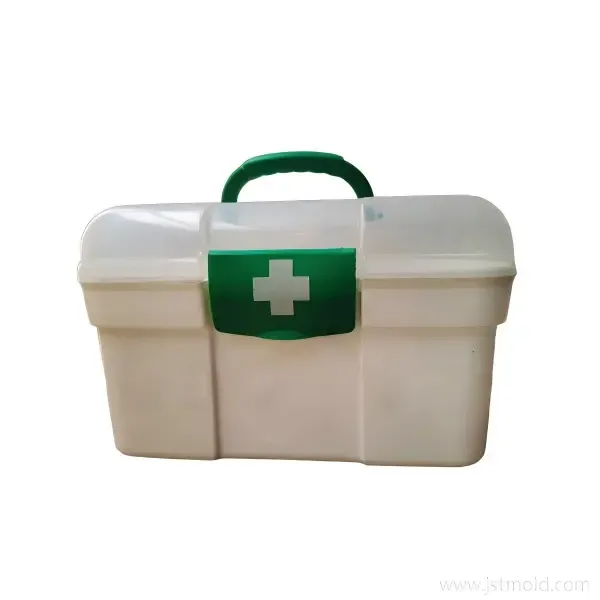
How to Buy a First Aid Case Injection Mold: Key Requirements Before Quotation
A first aid case, pharmacy box or medical storage case may look like a simple plastic container, but the injection mold is normally a custom engineering project rather than an off-the-shelf product.
The final mold design depends on the exact part geometry, material, hinge and locking structure, handle design, wall thickness, annual production volume, molding machine, surface requirements and expected mold life.
Buying the mold only does not mean buying a ready-made mold. The mold still has to be engineered around the customer's final product and production conditions.
Why First Aid Case Molds Are Usually Custom-Made
For this type of plastic case, small product changes can significantly affect the mold structure.
A change in lid geometry, hinge position, handle design, wall thickness, locking feature or internal rib layout may change:
- Parting-line design
- Gate position
- Ejection layout
- Slider or core-pulling requirements
- Cooling layout
- Warpage risk
- Assembly tolerance
- Mold size and cost
For this reason, professional mold makers normally do not manufacture a finished first aid case mold in advance and wait for a buyer. The mold is typically designed after the customer confirms the final product data.
Can a Mold Be Quoted from Reference Photos Only?
Reference photos and approximate dimensions are useful for an initial feasibility discussion, but they are normally not enough for a final tooling quotation.
Photos can help the mold maker understand the product concept, but they do not reliably define:
- Exact wall thickness
- Draft angles
- Internal ribs and bosses
- Hinge geometry
- Snap-fit dimensions
- Undercuts
- Surface requirements
- Assembly clearances
- Material shrinkage conditions
A preliminary review may still be possible, but the final mold structure and quotation should be based on confirmed product data rather than assumptions.
A lower-risk quotation starts with better product information.
What Information Is Needed Before an Accurate Mold Quotation?
For a more reliable tooling evaluation, buyers should provide as much of the following information as possible:
- 3D CAD data
- 2D drawings if available
- Overall part dimensions
- Target plastic material
- Wall thickness
- Surface and texture requirements
- Annual production volume
- Expected mold life
- Preferred cavity number, if already defined
- Available injection molding machine information
- Assembly and functional requirements
- Whether the buyer needs the mold only or molding support as well
If the project is still at the concept stage, JST Mould can first review reference photos and available dimensions, then advise what information is still required before final quotation.
Key Mold Design Challenges for First Aid and Pharmacy Cases
Although the exact tooling solution depends on the final product, several engineering issues commonly require attention.
- Lid-to-Base Alignment
The lid and box body must assemble consistently without excessive gap, interference or visible mismatch. This requires careful control of geometry, shrinkage and mold dimensions.
2. Hinge Design
Depending on the product, the case may use a living hinge or a mechanical hinge structure. Hinge geometry affects mold release, filling behavior, durability and assembly.
3. Locking and Snap-Fit Features
Front locks, snap fits and closures must provide enough retention without becoming difficult to assemble or causing local stress. These features should be reviewed during DFM rather than corrected after the mold is built.
4. Handle Structure
Handles may be integrated into the main part or produced as separate molded components. The final solution depends on geometry, strength requirements and assembly strategy.
5. Large Flat Surfaces and Warpage
Storage cases often contain large flat panels. These areas can be sensitive to warpage, sink marks and uneven shrinkage if wall thickness, rib design, cooling or filling balance are not well controlled.
Gate, Runner and Mold Structure Should Follow the Final Product
The gate and runner system should be selected according to part size, wall thickness, appearance requirements, material and production target.
For large box-shaped components, the tooling engineer should evaluate:
- Filling distance
- Pressure distribution
- Weld-line location
- Air traps
- Gate vestige requirements
- Part appearance
- Cycle stability
- Mold maintenance
Some projects may justify a more advanced gating or actuation solution, while others may use a simpler mold concept.
The correct mold structure should be decided from the final CAD data and production requirements, not from a reference photo alone.
Mold-Only Projects: What Buyers Should Confirm
Many customers purchase the injection mold only and install it in their own molding factory. This is a normal tooling business model.
However, the mold maker should understand the customer's production environment before final design.
Useful information may include:
- Injection molding machine size
- Tie-bar spacing
- Platen and locating-ring requirements
- Nozzle interface
- Mold opening stroke
- Ejection method
- Hot-runner controller requirements, if applicable
- Local mold maintenance capability
- Preferred mold standard or components
Confirming these items before mold release helps reduce the risk of compatibility problems after the mold arrives at the customer's factory.
How JST Mould Supports First Aid Case Tooling Projects
JST Mould supports custom first aid, pharmacy and medical storage case tooling projects from early feasibility review through mold manufacturing and trial.
Support can include:
- DFM review
- Mold structure evaluation
- Gate and runner assessment
- Hinge and locking-feature review
- Warpage and filling-risk assessment
- Mold material and life planning
- Mold manufacturing
- Mold trial and sample validation
- Export preparation for mold-only projects
The objective is to define the product and tooling requirements clearly before steel cutting, reducing avoidable changes later in the project.
First Aid Case Injection Mold Example
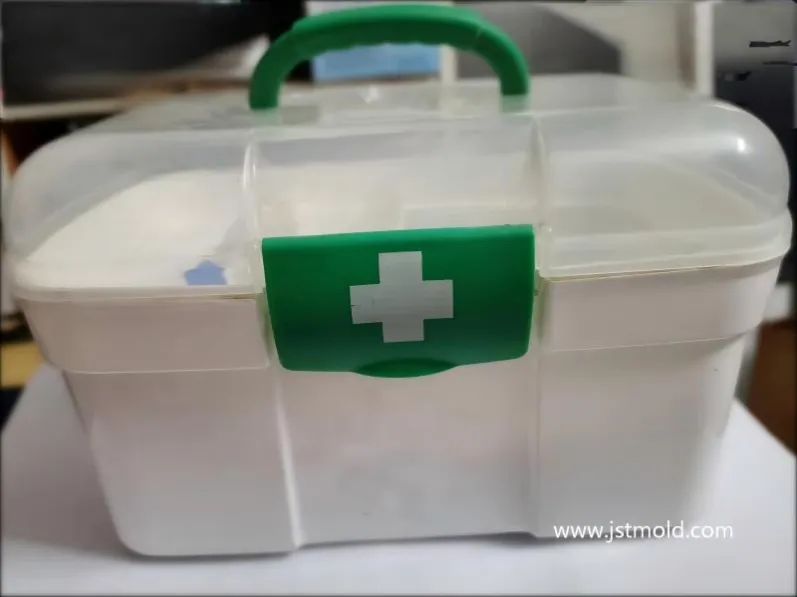
The reference case shown here includes several features commonly found in first aid and pharmacy storage products, including a rigid box body, lid, handle, hinge area and front locking features.
These visible features are useful for discussing moldability, but a final tooling solution still requires confirmed dimensions and product data.
Reference first aid and pharmacy storage case showing functional features relevant to injection mold design.
Technical Summary
Item | What the Mold Buyer Should Define |
|---|---|
Product Data | Final 3D CAD and key dimensions |
Material | Target plastic grade |
Functional Features | Lid, hinge, handle, lock and snap fits |
Production Target | Annual volume and expected mold life |
Mold Configuration | Defined after part and volume review |
Machine Information | Press size and interface requirements |
Main Engineering Risks | Warpage, alignment, filling, sink marks |
Project Scope | Mold-only or tooling plus molding support |
What Should You Send for a First Aid Case Mold Quotation?
For an initial review, please send:
- Available 3D CAD or 2D drawings
- Reference photos
- Approximate dimensions
- Target plastic material
- Annual production volume
- Surface requirements
- Injection molding machine information, if available
- Any functional or assembly requirements
If only photos are available at the early stage, JST Mould can first review the concept and advise what additional information is required before an accurate tooling quotation.
Need a Custom First Aid or Pharmacy Case Mold?
If you are developing a first aid box, pharmacy case or similar plastic storage product, send us your available drawings and project requirements.
JST Mould can review the basic moldability, tooling requirements and information needed before quotation.
FAQ
Can I buy only the injection mold without buying finished plastic cases?
Yes. Mold-only projects are common. The mold can be designed, manufactured, tested and prepared for shipment to the customer's own injection molding facility. However, the mold still needs to be customized around the final product and production conditions.
Do you have ready-made first aid case molds for sale?
Custom first aid case molds are normally designed around the buyer's exact product geometry, material, hinge, lock, handle, production volume and molding-machine requirements. For this reason, professional tooling projects are usually made to order rather than sold as universal ready-made molds.
Can you quote a first aid case mold if I only have photos and approximate dimensions?
Reference photos and approximate dimensions can support an initial feasibility review, but an accurate final quotation normally requires confirmed dimensions and preferably 3D CAD data. If CAD is not yet available, JST Mould can first advise what information is missing.
Why can two similar first aid cases require very different mold costs?
Small differences in wall thickness, hinge design, locking features, handle structure, undercuts, gate requirements, cavity number, mold life and production volume can significantly change the tooling structure and cost.
What are the main molding risks for large plastic storage cases?
Common concerns include warpage, filling imbalance, sink marks, lid-to-base mismatch, snap-fit performance and dimensional consistency. These risks should be reviewed during DFM before tooling release.
What machine information should I provide if I only want to buy the mold?
Useful information may include injection molding machine size, tie-bar spacing, platen dimensions, locating-ring and nozzle requirements, mold opening stroke and ejection configuration.
What should I send JST Mould to start a tooling review?
Please send available 3D CAD, 2D drawings, reference photos, dimensions, target material, expected annual volume, surface requirements and molding-machine information if available. If some data is missing, JST Mould can first identify what is required for the next step.