
Jul 26, 2026Tier-1 Success Stories
Automotive Cockpit Engineering: Mastering Class-A Surfaces and NVH Suppression in Molding
Master 5 interior molding hurdles: Class-A surface defects, NVH, and +/-0.01mm snap-fits for rattle-free Tier-1 automotive cockpit assemblies.
Why do so many automotive interior projects fail at the T1 stage? It usually comes down to these 5 overlooked technical hurdles.
Introduction
Visual defects on a dashboard aren't just ugly—they kill the brand's premium feel. In the Tier-1 automotive world, "good enough" surfaces mean warranty claims and rejected shipments. At JST Mould, we treat automotive interior molding as a high-stakes balance between material science and thermal control. Here is how we handle the 5 critical technical hurdles to deliver zero-defect cockpits.
- The "Class-A" Surface Challenge: Eliminating Visual Defects
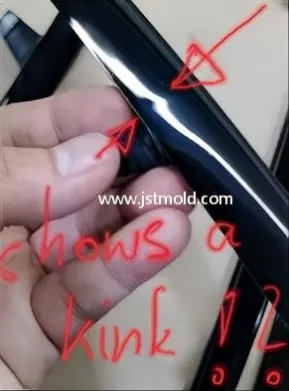
The Zero-Defect Standard: Identifying and eliminating subtle surface kinks in high-gloss trims.
Visible components like steering column shrouds or decorative trims demand a flawless matte or high-gloss finish.
The Problem: Flow lines, sink marks, and parting line flash can ruin the aesthetic.
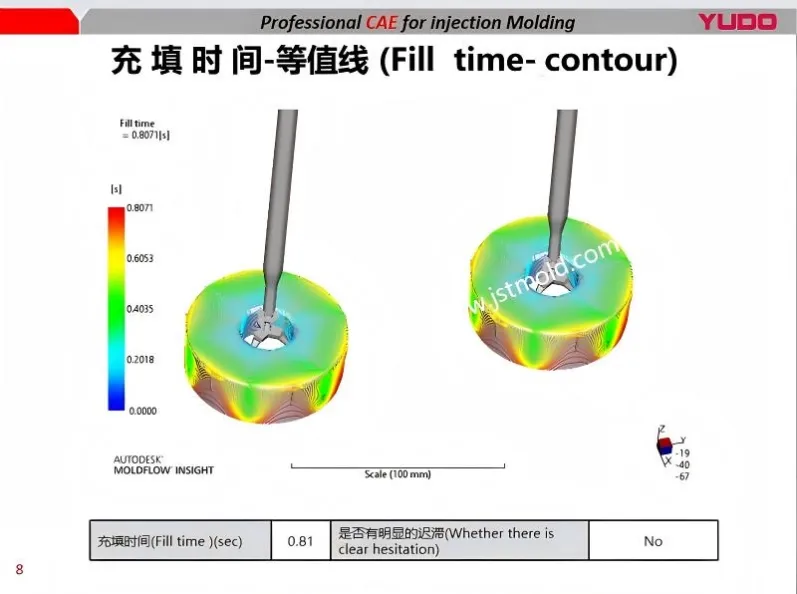
The JST Solution: Based on our 14+ years of experience in high gloss automotive trims, we utilize advanced Mold Flow simulation and mirror-polished cavities (SPI A-1) to ensure uniform material distribution. Strategic gating and venting eliminate surface imperfections before they happen.
CAE-Driven Aesthetics: Optimizing fill time to ensure defect-free Class-A surfaces.
- Geometric Stability in Long-Stroke Components
Parts such as pillar trims and door sills are often long and thin, making them highly susceptible to warping.
The Problem: The "banana-effect" or bowing during cooling makes assembly impossible.
The JST Solution: We implement conformal cooling layouts and strategic rib reinforcement. By managing the thermal profile across the entire tool, JST Mould ensures absolute longitudinal straightness and dimensional registration.
- Mastering Complex Snap-Fit & Assembly Precision
Modern cockpits rely on "Gap & Flush" perfection. If the snap-fits on a dashboard bezel are off by 0.05mm, the part will rattle.
The Problem: Material shrinkage variability causes fitment issues.
The JST Mould Engineering: We utilize micron-level CNC machining and T1-T3 validation protocols. Our technical tooling maintains tolerances within +/- 0.01mm, ensuring a rattle-free, secure "click-to-fit" assembly.

Precision Base: Achieving the mechanical accuracy needed for rattle-free "click-to-fit" assembly.
- Material Engineering for NVH & Durability
Interior parts must survive extreme heat (sunload) and repeated mechanical stress without degrading or causing noise.
The Challenge: Balancing impact resistance with Noise, Vibration, and Harshness (NVH) suppression.
The JST Strategy: We offer personalized customization for high-performance resins like PC/ABS and low-emission PP. Our structural engineering focuses on rib density and wall thickness to absorb vibration and enhance the cockpit's acoustic quality.
- Accelerated Program Timelines: Speed-to-Market
Vehicle lifecycles are shrinking, and OEMs demand production-ready tools in record time.
The Challenge: Reducing lead times without sacrificing precision.
The JST Commitment: Through our vertically integrated facility and "Fast-Track" project management, we provide high-precision T1 samples and production tooling with industry-leading speed, keeping your launch schedule on track.
Conclusion
At JST Mould, we don't just manufacture plastic parts; we provide engineering solutions for the world’s most demanding automotive programs. From DFM analysis to IATF 16949-compliant mass production, we are your strategic partner for interior excellence.
Does your current supplier struggle with the "Gap & Flush" audit?
Stop wasting weeks on T1, T2, and T3 trials because of surface defects. If your mold maker doesn't own a 30,000 RPM high-speed mill or understand SPI A-1 standards, they are costing you money.
Bring your most challenging interior project to JST Mould:
- Get a 48-hour DFM aesthetic risk audit.
- Review our "Gap & Flush" tolerance stack-up analysis.
- Verify your project against IATF 16949 quality logic.